
How to build a photo portfolio that sells?
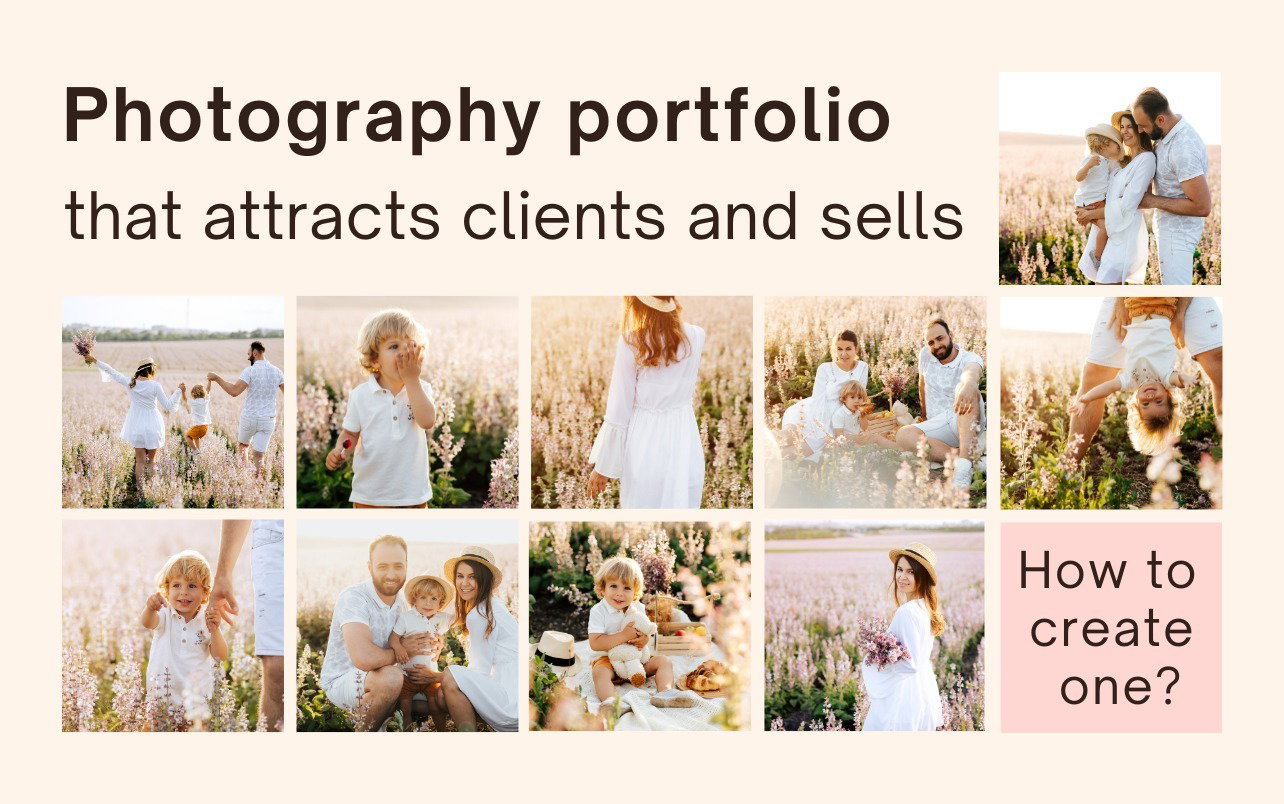
A good photo portfolio is one of the most important sales tools in the photography industry. There is no room for random shots. The choice of photos should be well-thought-out and driven by a communication strategy with clearly defined goals and target group.
The photos in your portfolio should present your services, but also trigger specific emotions. If you think this through, potential clients will think about your photos even days after seeing your portfolio, show them to friends, and figure out how to use EXACTLY YOUR SERVICES. Admit that it sounds good.
We will show you how to do this. In today's post, we will go step by step through the entire process of designing a good portfolio that not only catches the eye, but also SELLS, turning visitors into paying clients.
We will identify the most common mistakes made by photographers, discuss the challenges creators face, and present practical solutions to help you effectively show your services.
Step 1: understand your target group
To effectively attract the right clients, think about what niche you want to specialize in. Understanding who needs your services will help you decide which photos to include in your portfolio and how to present them.
If you decide on a narrower specialization, e.g., newborn sessions or corporate photos, your message will be more consistent, and your target group easier to engage.
Remember that the key is not only to define who your client will be, but also to understand: why they choose your services, what needs they have, and what they expect from a photographer.
Young couples are looking for someone to capture the most beautiful moments of their lives in a way full of emotion and artistic value.
Your portfolio should highlight elegant, moving photos from ceremonies, receptions, and outdoor sessions that touch the heart, but also perfectly tell the story of this very important day in the lives of the lovers.
Entrepreneurs are looking for a photographer to help them build an image matching their brand. Your portfolio should emphasize professionalism and a unique tone of communication, whether through portrait photos or advertising sessions.
Families are looking for a photographer to help them capture a special moment, e.g., birth, birthday, anniversary, first holidays, or another important event. Your photos should show intimate, warm moments that reflect emotions and closeness.
Artists and influencers often look for creative creators. The portfolio can include artistic sessions that show originality and individual style.
Step 2: answer the question: what photos do you want to sell?
Creating a portfolio is also answering the question: "whose photos do you want to sell?". If you want to attract a specific target group, you must show knowledge of their expectations and preferences.
Remember that a portfolio not only shows your technical skills, but also your style and approach to photography. That is why it is so important to define what type of assignments you want to take on – only then can you create a portfolio that works for those who are looking exactly for you.
What questions should you ask yourself when building a portfolio?
- Who is my ideal client?
- What services would I like to provide and for what target group?
- What emotions do I want to trigger with my photos?
- What client problems can I solve with my work?
- What stories do I want to tell? What values do I believe in and what do I want to share with my clients?
- What style of photography do I like?
- What are the dream photos I want to see in my portfolio in the future?
- What message do I want to convey with my work?
- What elements of my work are unique compared to other photographers?
- What aspects of my work are praised most often?
Step 3: choosing photos for the portfolio
The decision of which photographs will be in your portfolio is crucial for your business and image. This is exactly what determines how you will be seen as a photographer and whether potential clients will decide to work with you.
Not every photo you like will be suitable – the most important thing is how the viewer will perceive it. Choosing photos therefore requires care and objectivity, which is not so simple.
- Your portfolio should be stylistically consistent and consistently present your approach to photography. If you specialize in romantic and natural photography, avoid photos with a cold, studio feel that can be confusing for viewers. When selecting photos, keep asking yourself: "What emotions should my photos trigger?".
- A short portfolio with 10–15 excellent photos is better than a large gallery where the client will get lost in too much content. The key is for every photo in the portfolio to be of the highest technical (sharpness, composition, colors) and emotional quality.
- If a photo does not amaze you, it is better to skip it. A portfolio is a place for your best works, and every photo should be proof of your creativity and skills.
Photos for a photographer's portfolio – key features
- Technical perfection
- Emotions and story
- Versatility and variety
- Attention to detail
Step 4: choosing photos is not everything, their presentation also matters
The way you present your photos in your portfolio is just as important as the choice of photographs. Even the best works can lose value if they are not presented in a well-thought-out and aesthetic way.
A professional layout, attention to detail, and visual harmony are key elements that will attract the attention of potential clients and encourage them to browse your portfolio.
- Make sure the selected photos match each other well in terms of style, colors, and mood.
-
Avoid mixing very different types of photography on one subpage, e.g., business and romantic sessions. If you offer different types of services, consider dividing the portfolio into thematic sections, such as "Wedding photography", "Family sessions", or "Business photos".
- Clients browse the portfolio quickly, so ensure clarity and readability.
- A thoughtful order of photos can help build a story that engages the viewer. For example, in a wedding portfolio, you can start with preparations, through the ceremony, to the outdoor session and reception.
- Your portfolio must look equally good on a computer, tablet, and smartphone.
- Choose a background that highlights the photos, and does not compete with them. Usually, white, black, or neutral backgrounds are used to let you focus on the photos.
-
Short captions under photos can help understand the context.
- If you are worried about your photos being stolen, you can add discreet watermarks or disable the download option on your website.
A potential client judges your website and portfolio in a few seconds. If the layout is chaotic, photos are of different quality, and the page loads slowly, you may lose the chance to work together, even if your photos are excellent. Presentation is your business card – make sure it is at the highest level and reflects the professionalism you offer as a photographer.
How to create a photo portfolio? Use available technologies and tools for photographers
Of course, the best place to present your portfolio is your own website. It is a place on the internet that fully belongs to you (unlike social media, which can break down or change their rules overnight).
We realize that building your own website is not that simple. It involves many challenges – buying a domain, hosting, and proper security, as well as working with a developer studio, which is usually expensive.
If you want to skip these steps, you can also use other solutions that make it easier to create your own place on the internet yourself, such as our Mafelo system for photographers.
Tools for photographers to create a portfolio by themselves
Thanks to Mafelo, you can quickly create a simple portfolio website that will be elegant, responsive, and easy to use. The application allows you to personalize the look of the website to match your photography style, and also enables quick session bookings, as well as selecting and selling photos.
So without much effort, you get a portfolio website, a photo booking system, and a store with online payments all in one.
Wix is a popular website builder that offers easy-to-use templates. You build the website using the drag-and-drop feature, so you do not need to know HTML code. You can easily add photos to the page, adjust the layout, and change visual elements without the need for programming skills.
Does your portfolio consist mainly of a large number of photos? Zenfolio is a specialized platform for photographers that allows you to create a professional online portfolio. It also has a photo selling feature and integration with ordering and booking systems. The downside is that it is a foreign tool, so using the panel and support in case of problems may be a bigger challenge.
Currently, the application is no longer being developed, at least this is the information we found on their website. You can download it, but do not expect it to be adapted to the changing realities of the internet. It is therefore worth keeping in mind that this is only a temporary solution, which in the long run should be replaced by an individual website.
A portfolio website for a photographer – key elements
First of all, your website must be fully responsive, meaning it should look good on a computer, tablet, and smartphone, because that is how most potential clients use it.
Moreover, your website should have clear tabs that allow quick access to the most important information – e.g., portfolio, offer, price list, contact details. The user should easily find the photos they are interested in and be able to contact you quickly.
The third thing – it is worth taking care of SEO. Your website should be optimized for search engines. This means (to oversimplify) that appropriate keywords, such as "online photography portfolio" or "wedding photographer", should be included in the page title, headings, photo descriptions, and content. This will make your portfolio easier to find on Google.
Is it worth adding a description to individual photos in the portfolio?
Absolutely! Adding descriptions to photos in a portfolio is a technique that can significantly improve communication with potential clients. Although many photographers skip this part, a properly written photo description can attract attention, explain the context of the photo, and help the client understand why a given work is special.
Good descriptions not only make it easier for clients to understand your style, but also support SEO, increasing your website's visibility in search engines.
How to write photo descriptions in a photographer's portfolio?
1. Be specific
The description does not have to be long, but it should be specific and informative. Avoid generalities like "beautiful photo" or "cool composition". Instead, focus on details:
- describe what emotions you wanted to capture in a given photo,
- describe what is special about the shot, why this photo was created,
- you can point out the photographic technique that made it possible to achieve a specific effect.
Example: "Portrait of a woman in the light of the setting sun, using a 50mm f/1.8 lens, which allowed to achieve a beautiful bokeh effect in the background".
2. Include information about the style and mood of the photo in the content
If you have a specific photography style, e.g., elegant, natural, romantic, it is worth highlighting this in the description. Pointing out the mood of the photo will help the client better understand if your photography meets their expectations.
Example: "Boho style wedding session, with natural light and delicate details that emphasize the intimate character of this day".
3. Include the purpose of the photo
The photo description can also include information about its purpose. Was the photo created for commercial or portrait purposes, or maybe it was part of a larger project? A well-chosen purpose will help show the client how your work can be used in different contexts.
Example: "Portrait photography for the XYZ company website, aimed at capturing a professional but friendly image of the owner".
4. Use appropriate keywords
Besides helping to better communicate with clients, photo descriptions can also affect your website's SEO. Make sure the descriptions include phrases that are popular in your industry. It is worth adding keywords related to the type of photography, location, and technique.
Example: "Professional product photography – studio photoshoot with flash lighting".
5. Keep a balance between text and image
The description should support the photo, but not overwhelm it. Too long text can make the client focus more on the description than on the photo. Try to be concise but informative. Descriptions that are too short may not convey enough information.
A photo portfolio is not everything! Trust is the key to sales
Although the portfolio is the foundation of your offer, it is trust that really translates into sales. Remember that potential clients are looking not only for beautiful photos, but also for certainty that working with you will be successful.
How to build trust?
- Add reviews from happy clients to your portfolio.
- Share photo reportages, which means let potential clients go from a single photo to the whole story.
- Ensure easy contact and a detailed description of the scope of services.
- It is best if the client immediately has access to quickly check dates and book a session online, this makes the cooperation process easier.
Summary: How to create a photo portfolio that sells?
Building an attractive portfolio that sells requires more than just good photos. The key is understanding the needs of your target group and presenting photographs that meet those needs.
- The foundation of an effective portfolio is carefully selected photographs, consistent presentation, and easy access to information about services.
- The second thing is client trust, which you will build not only with the quality of your photos, but also with clear communication, a convenient booking option, and client recommendations.
If you want to quickly create a professional portfolio website, the Mafelo system offers a perfect solution for photographers – easy to use, with online photo booking and selling features.
See for yourself how Mafelo can improve your sales process and help you attract more clients! If you have additional questions – we invite you to the comment section or to contact us.

An expert in marketing, copywriting, and sales. She has years of experience writing for the photography industry. At Mafelo, she shares her marketing knowledge and turns the news and tips we want to give you into great articles.
You might also like
How to collect photo publication consents in kindergartens and schools? New Mafelo features

A photographer's digital products. Why don't they sell themselves?

How to collect customer reviews? A guide for photographers