
First steps as a photographer – good equipment and talent are not everything
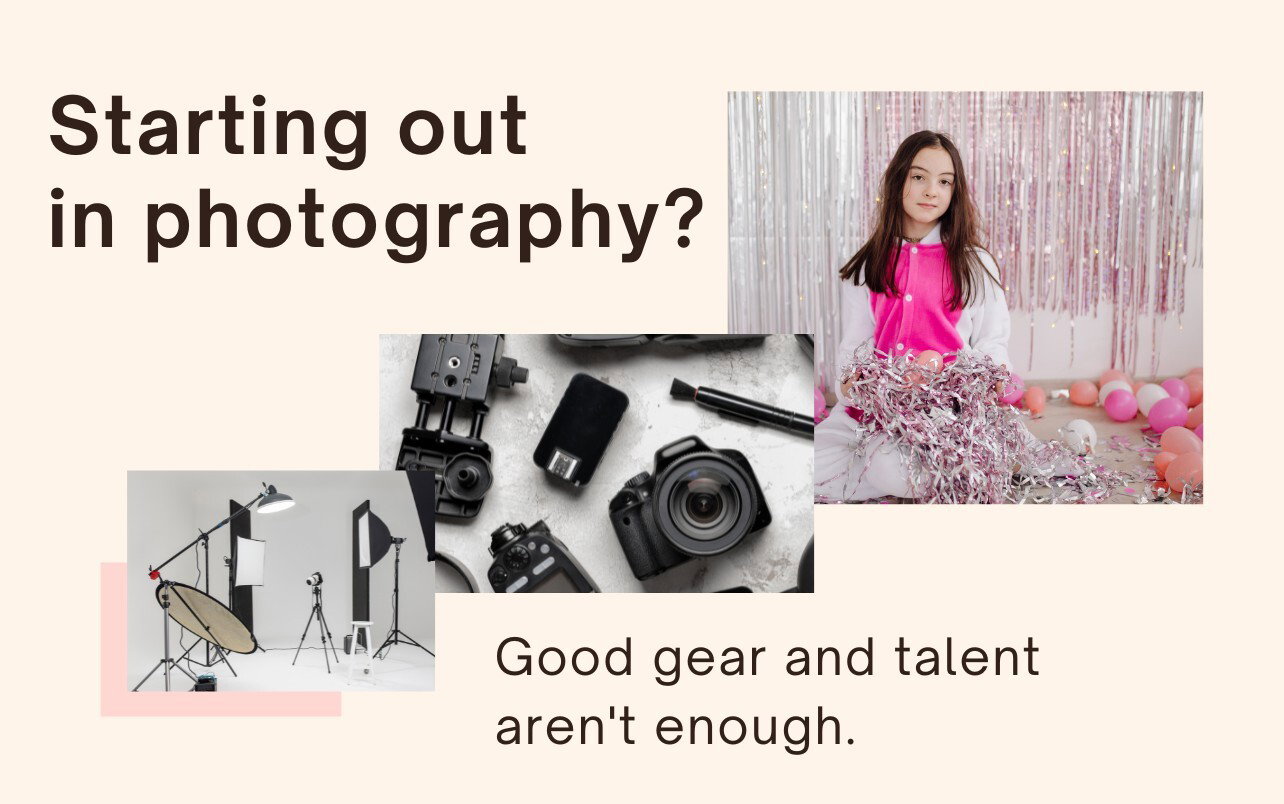
You dream of working as a photographer, but don't know where to start? Maybe you already have a camera, your first sessions behind you, and a great passion... but at the same time, you feel that just knowing how to take good photos is not enough. How to get your first clients? Is it worth investing in expensive equipment right away? How to stand out from other photographers?
These are the questions almost everyone asks at the beginning of their adventure with professional photography. Unfortunately, this industry is not the easiest one. Competition is high. Client expectations are growing. What matters is not only talent and technique, but also organization, marketing, and relationship building skills.
In this article, we will show you what to focus on at the start and what mistakes to avoid, so that entering the industry is smooth and rewarding. This knowledge will give you peace of mind, but also help you organize many things.
We hope that with Mafelo, your first steps as a photographer will be a pure pleasure.
Where to start your photography career?
Starting work as a photographer can seem overwhelming. Choosing the right equipment, learning how to use the camera, building a portfolio, and getting your first clients are just some of the challenges waiting for you. Many people at the beginning wonder if they should invest in expensive equipment right away, or maybe focus on skills.
The truth is that success in photography depends on combining a few key elements: technique, experience, and approach to work. How to start? We have gathered specific tips for you.
Is equipment crucial right at the start?
You can't take photos without a camera, but it's not the equipment that makes you a professional. Good technique and understanding the basics of photography allow you to achieve great results even on cheaper equipment.
How to choose your first camera?
Of course, a solid guide of several dozen pages could be created about this. If we have to give you any advice in one paragraph – only one tip comes to mind: start with equipment that will not ruin your budget, but will allow you to develop. You don't have to buy the latest model – a used camera in good condition can be an equally good choice. It is important that it has manual settings, which will give you better control over your photos.
The lens is more important than the camera
The camera is the base, but it is the lenses that largely affect photo quality. For a start, a good choice is a fast prime lens, e.g., 50 mm f/1.8. It is relatively cheap, and at the same time allows you to get good sharpness and nice background blur.
Basic accessories worth having
Tripod – useful for night, landscape, or product photos.
Memory cards – ideally a few items with large capacity.
Extra batteries – remember that the camera often runs out of power at the least expected moment.
At this stage, there is no need to invest in expensive flashes or professional studio sets. It is worth focusing on learning natural light and the basics of composition.
What skills are crucial for a beginner photographer?
Photography is not just operating a camera. A good photographer must combine technical skills with knowledge of working with clients, composition, and marketing.
Technical skills of a photographer
The foundation is knowledge of the exposure triangle – the relationship between shutter speed, aperture, and ISO sensitivity.
Also essential is the ability to use manual mode and adjust settings to lighting conditions.
It is also good to learn the basics of photo editing. Programs like Adobe Lightroom or Capture One allow you to improve colors, contrast, and sharpness of photos, which significantly increases their quality.
See also: Top tools in a photographer's work
Soft skills of a photographer
A photographer's work is not only technique, but also the ability to work with people. Building relationships with clients, the ability to direct a photo session, and creating the right atmosphere are key aspects of work, especially in portrait or wedding photography.
It is also worth developing organizational skills. Running your own photography business requires managing orders, deadlines, and finances. Good organization helps avoid chaos and makes work more efficient.
In this area, you can count on Mafelo's support in many matters. Our application for photographers is a real game changer in managing bookings, payments, and client communication. It works well for both experienced photographers and beginners. You can test the application completely for free. You can find more information here: pricing.
How to get your first clients as a photographer?
Alright, let's move on to the next steps, which is looking for clients. The beginnings in a photographer's work can be a challenge. Even if you take great photos, it is crucial to reach people who will want to pay for them. Getting your first orders requires a strategic approach – you need to ensure the visibility of your work, make valuable contacts, and show initiative.
Portfolio – how to build it from scratch?
A portfolio is a photographer's business card. Potential clients want to see your previous work before they decide to cooperate. But what to do if you are just starting out and don't have many sessions under your belt yet? Here are a few proven methods for beginner photographers.
Free sessions for friends
Start by photographing family and friends. Ask them to take part in a session in exchange for ready photos. Thanks to this, you will practice different techniques, learn how to work with people, and get your first materials for your portfolio. You can offer portraits, family sessions, stylized outdoor sessions, or product photography – depending on what field of photography you want to specialize in.
TFP projects (Time for Photos)
This is a popular form of cooperation where a photographer, model, and, for example, a makeup artist work without pay, exchanging the results of the session. Such sessions are a great way to create professional photos that will enrich your portfolio. You can look for willing people in thematic groups on Facebook or on platforms for creators, such as MaxModels.
Documenting events
Reach out to local organizers of events, concerts, or fairs and offer to take photos for free in exchange for the opportunity to publish the material in your portfolio. This is not only a chance to gain practical experience, but also an opportunity to make your first business contacts.
Creating your own projects
You don't have to wait for clients – organize thematic sessions yourself. If you want to do wedding photography, you can do a stylized session for a couple of friends. If you are interested in product photography, you can start by photographing objects you have at home and testing different lighting techniques.
Remember to publish the results of your work on your website, on social media, and in the form of a well-organized online portfolio. This way, potential clients will easily find your photos and will be able to evaluate your style.
See also: How to build a photo portfolio that sells?
Where to look for your first orders as a photographer?
Just having a portfolio is only the beginning. To get your first paid orders, you must actively promote your work and build a network of contacts. Where and how to do it? We have prepared a short cheat sheet.
Social media – your window to the world
Instagram, Facebook, TikTok, or Pinterest are powerful tools for photographers. Post photos regularly, share behind the scenes of your work, and build relationships with your audience.
Instagram is a great place to showcase your portfolio. Add valuable descriptions, use local hashtags, and engage in interaction with other users.
On Facebook it is worth joining local thematic and classified groups where people look for photographers for various orders.
TikTok is also gaining popularity! More and more photographers are getting clients thanks to short videos showing session results, tips, or interesting outdoor locations.
Pinterest is a platform based on visual inspirations, thanks to which your photos can reach a wide audience.
Networking – building relationships in the industry
Needless to say – in the photography industry, orders often come from recommendations. Make contacts with other photographers, models, makeup artists, or event organizers. You can also participate in industry meetings, photography workshops, or meetups, where you will meet people from the industry and potential clients.
Recommendations – don't be afraid to ask for reviews
Remember that a satisfied client is the best advertisement. If someone was happy with your session, ask them to share the photos on their social media and tag your profile. You can also encourage clients to leave a review on Facebook or Google Business Profile.
Advertisements on portals and forums
There are services where clients look for photographers – e.g., OLX, Fixly, Oferia, or Facebook groups like "Looking for a photographer". You can also create a profile on websites for professionals, such as MyWed (for wedding photographers) or Behance (for art and commercial photographers).
Cooperation with local companies
Reach out to local entrepreneurs – beauty salons, restaurants, hotels, or boutiques – and offer to take photos for their promotional materials. Many small businesses need good photos for social media, but don't have the budget for it yet – this can be an opportunity to get your first orders in exchange for payment or service exchange.
Getting your first clients requires taking action, but well-planned steps will allow you to build an audience base and gradually develop your photography career. It is important not to get discouraged at the beginning and constantly develop your skills and network of contacts.
How to stand out in the photography market?
Unfortunately, this is still not the end. As we mentioned – the photography market is becoming more and more competitive. To stand out in the industry, you must not only take great photos, but also consistently build your image and consciously approach the pricing of your services.
Do you want to promote yourself? Build a photographer's personal brand
A strong personal brand is what makes clients choose you and not another photographer. It's not just photos, but also your style, way of communication, and the values you convey.
Find your unique style
It is worth determining what kind of photography you feel best in – is it wedding, portrait, family, or maybe product photography? Even within one field, you can stand out – e.g., by a characteristic way of editing, the mood of the photos, or your approach to working with clients. This doesn't mean that you have to limit yourself to one specialization from the very beginning, but it is worth consciously shaping your style, which will be recognizable.
Social media – the key to visibility
Your photos must be visible where your potential clients are. Regular activity on social media allows you not only to reach more people, but also to build relationships and strengthen your brand.
Professional website
Social media are important, but your website is the place where you can show your full portfolio, describe your offer, and convince clients to cooperate.
The website should be readable, responsive, and contain:
portfolio divided into categories,
information about you and your work style,
clear offer and price list (if you decide to provide it),
contact details and a form for quickly sending an inquiry.
See also: Session booking website – 5 essential elements
Communication and relationships with clients
The way you talk to clients matters a lot. Proper communication builds a professional image and makes clients eager to recommend you.
It is crucial to respond quickly to inquiries, clearly define the rules of cooperation, take care of a good atmosphere at sessions, and maintain relationships with clients after the session is done (e.g., sending newsletters, holiday wishes).
Most common mistakes of beginner photographers
As you can see, starting a career in photography is an exciting but also demanding process. Many beginner photographers focus solely on developing technical skills, forgetting about business aspects. This leads to mistakes that can hinder development and make the passion for photography become frustrating.
We want to warn you about this. After all – it's best to learn from other people's mistakes, not your own. Here are two of the most common traps beginners fall into.
Mistake 01: underpricing and free sessions without a strategy
One of the biggest mistakes is offering free sessions without thinking or setting prices too low. Many people at the beginning want to gain experience and a portfolio, but if they approach this without a plan, they can fall into the trap of working for free for a long time.
When do free sessions make sense?
If you are building a portfolio in a specific niche and want to show your skills in a given style.
When cooperating with people who can help you reach new clients (e.g., influencers, models, companies).
When you have a clearly defined strategy – e.g., you offer a free session in exchange for the opportunity to publish photos and a review on the website.
Why is underpricing dangerous?
First of all, it is difficult to raise rates later – clients get used to low prices and may not accept increases. Secondly — you are not building the value of your work. Cheap services are often perceived as less professional. This, in turn, leads to another problem: you attract the wrong clients – people looking for the cheapest offers usually do not appreciate quality and professionalism.
How to set prices to start?
Calculate the real costs of your business – equipment, software, working time, travel.
Check competitors' prices in your area and do not go significantly below their level.
If you want to attract clients, instead of low prices offer additional value – e.g., more photos, fast delivery time, unique experience during the session.
Mistake 02: lack of marketing and sales skills
Many beginner photographers believe that good photos are enough to get clients. Unfortunately, without effective marketing and sales skills, it is hard to break through in a competitive market.
What is the worst? Lack of a coherent online presence. Outdated or poorly run social media – irregular posts, lack of interaction with the audience, chaotic content. Another thing is the lack of a website. If you don't have your own place on the web, it is much harder to build a professional, credible image. And another problem – too general messages. If you don't define what you specialize in, it will be harder to remember you.
How to improve this?
Regularly publish valuable content – not just photos, but also behind the scenes, tips, and client reviews.
Write in an engaging and authentic way – show your personality and approach to work.
Adjust content to your target audience – if you do family sessions, your messages should be different than those of a business photographer.
However, marketing is not everything. Equally problematic is the inability to sell your services. Fear of talking about prices and negotiating. Lack of a clear offer, which makes a potential client not know what they get as part of the service. And the lack of a strategy to reach clients. Counting on the fact that orders will appear by themselves is one of the biggest sins of beginner photographers.
How to improve the sales of your services?
Create a transparent offer, in which you clearly define what a given service includes.
Don't be afraid to talk about prices and the value of your work – the client needs to know what they are paying for.
Use recommendations and reviews – satisfied clients are the best advertisement.
Build relationships – the better you understand the needs of your clients, the easier it will be to convince them to cooperate.
See also: How to write an effective offer for photography services?
Summary – what to do to start effectively?
As you can see, starting a photography career is not just talent and good equipment. To build a stable business, you need to act strategically and consistently develop your skills, both photographic and business ones.
Invest in basic equipment – choose a camera and lenses adjusted to your specialization. You don't have to have the most expensive equipment, but it's worth knowing its capabilities.
Perfect your craft – learn technique, lighting, and editing. Use courses, guides, and practice as much as possible.
Build a portfolio wisely – at the beginning it is worth doing a few free sessions, but only on the condition that they bring value (e.g., cooperations, tests, materials for the portfolio).
Actively look for first clients – use social media, recommendations, networking, and local thematic groups.
Stand out in the market – take care of consistent visual communication, authentic style, and engaging content.
Don't be afraid to set prices – determine rates that cover your costs and reflect the value of your work. Do not work for free without a strategy.
Invest in marketing and sales – run a website, publish regularly on social media, build relationships with clients.
Do you want to learn more about how to effectively develop in the photography industry?
Follow us on social media and check out other articles on our blog – you will find plenty of knowledge there about photography tools, strategies, and techniques.
Another thing, regularly watch interviews from the #RozwójFotografa series with Mafelo – our guests share their experience, advice, and proven ways to succeed in the industry. It is worth using this free knowledge and building your business step by step.
Remember that development in photography is a process – the better you prepare for it, the faster you will see results!
We keep our fingers crossed for your actions.

An expert in marketing, copywriting, and sales. She has years of experience writing for the photography industry. At Mafelo, she shares her marketing knowledge and turns the news and tips we want to give you into great articles.
You might also like
How to collect photo publication consents in kindergartens and schools? New Mafelo features

A photographer's digital products. Why don't they sell themselves?

How to collect customer reviews? A guide for photographers